

Here’s an investing rule for you: Be wary of pearls of wisdom. Any “pearl” that can be summarized in six words or less may have the advantage of making life easier, but often that’s about this, and following these items of the usual understanding too closely can be a recipe for disappointment.
How to beat interest rate uncertainty if you’re purchasing stocks

It’s accepted as dependent on proven fact that markets hate uncertainty. Most investors, given an option, like to know what they’re dealing with, and also the smart ones (e.g. Warren Buffett) look for companies that offer steady cash flows, a sustainable competitive advantage and also the financial strength to withstand storms.
Continue reading.
Take “Buy low, sell high,” for example. Sure, it sounds good. But what’s your definition of low? What do you mean by high? There can be a greater to follow your selling, or perhaps a lower to follow along with your buying.
Another adage often bandied about available trading is “Buy the rumour, sell the news.” It basically assumes that asset prices will rise in anticipation of news developments (the rumour phase), and decline following news developments as investors place their profits. So the time for you to “get in” is during the rumour phase, when there’s high upside to news developments.
In a world of nearly instantaneous news dissemination, obviously, the lag from a rumour and a bit of actual news is getting smaller constantly. What feels like rumour soon becomes noise, which after a while begins to appear to be news. The media cover the noise, that isn’t really news. Even when the underlying rumour has been largely discredited or undermined by other developments, the noise can persist, and continue to have an impact on asset prices.
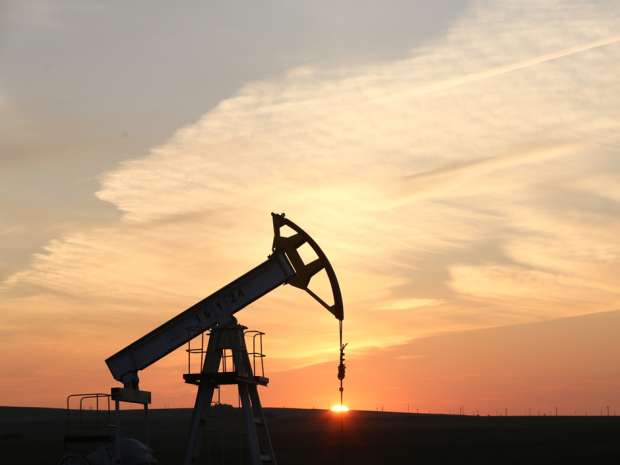
Consider the short-lived run-up in oil prices around the end of recently, when benchmark WTI briefly neared US$34 a barrel. To my mind, it’s an example of how the lines between news, rumour and noise are becoming blurrier all the time – making following old investing adages a dodgy enterprise.
If you remember, the move came amid speculation the Russians and/or the Saudis and/or the entire Organization of Petroleum Exporting Countries (OPEC) were available to production cuts to create stability to oil markets.
The source of the speculation would be a comment from Russian Oil Minister Alexander Novak on Jan. 28. He told reporters that OPEC had proposed a five-per-cent cut among major oil producers (OPEC and non-OPEC members, like Russia, included), and implied that the proposal was being led by Saudi Arabia. Or, rather, when asked whether this proposal had come from Saudi Arabia, he didn’t say no.
The result: a flood of reports that the Saudis and Russia were about to agree with 5 percent solution, and benchmark crude prices jumped almost 10 %.
Related
- If you thought the economy was bad in Canada, you need to see what’s happening in BrazilThank goodness that’s over: Oilpatch has bigger items to worry about than royalty review
-
-
-
Now, was this rumour or news? Difficult to tell – it was almost news of the rumour.
Saudi Arabian and OPEC officials were quick to deny there was any such proposal, though there were reports, naming unidentified Saudi officials, that they are dedicated to steps that will stabilize the marketplace. Which is a lot like a politician saying he is dedicated to protecting puppies.
Anyway, the rumour/news had the ring of truthiness into it (to borrow an expression from Stephen Colbert), because it followed a bromide from OPEC Secretary General Abdalla El-Badri that OPEC and non-OPEC members should interact to resuscitate oil prices, and a fillip from the oil minister of Iraq that Saudi Arabia and Russia were prepared to become “more flexible” on production.

So what’s the reality? Well, we still have no idea. Russia says it is having meetings with OPEC members. OPEC watchers and media still speculate on the chance of Russia and the Saudis co-operating. The price of oil is back around US$30.
What will it all mean? My prediction: pretty much nothing.
For one thing, what can function as the motivation for that Russians to chop production? They have never shown a willingness to get it done before, and in the past, whether they have led the world to believe they were available to cutting output, they did not do it. (The Saudis without doubt keep in mind that.) Right now, the Russian economy is in such a state of disarray that it needs every petro-dollar it may produce. And let’s remember the statements of Russian politicians aren’t exactly renowned for their reliability.
What could be in it for Saudi Arabia? Sure, they’re paying hand-over-fist for the current price war, but there is no real sign that OPEC’s heaviest hitter is about to change tack since its means of beggaring non-traditional producers might be producing some results. In for anything, set for a riyal.
Then you will find the geopolitical implications, specifically around Syria. Russia backs the Assad regime; Saudi Arabia backs the rebellion. Do we really think they will agree – or stick to an agreement – on something as sensitive to the Mideast as oil prices?
Of course, it could happen. But it probably won’t. Meanwhile, if the investor took this rumour-news as a sign that oil prices had found a bottom, she’d likely be sorely mistaken.
What the Russia-OPEC deal speculation really shows is not a bottom, but that oil prices remain highly prone to the merest whiff of optimism.
When confronted with stories which are really neither news nor rumours, investors may want to be careful to read between your lines. If they do, they may visit a lot of horse pucky.